
-
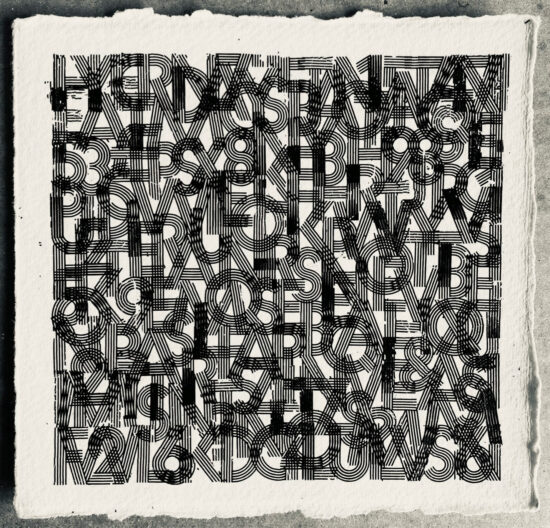
Ian Swift – Prisma
Designer and artist, Ian Swift set the tone of cut and paste sample culture design in London throughout the 90s. His logos were more than idents, they were the flags of movements. With the publication of his monograph in 2017 he drew a line in the sand and left behind his former moniker 'Swifty', embarking on a new artistic practice that focused on his passion for typography without the restraints of commercial communications. He lives and works in London.£350.00 -
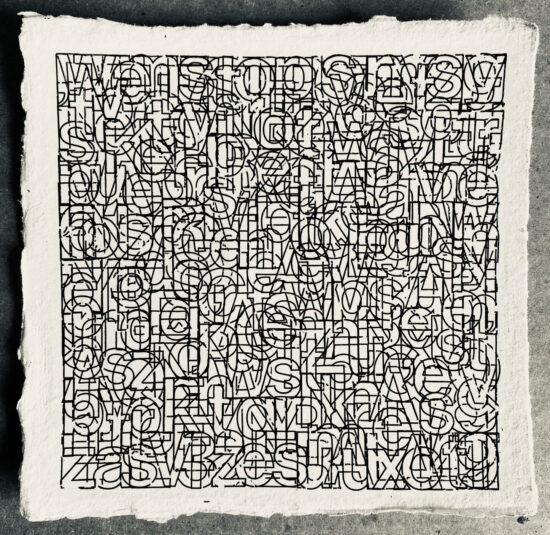
Ian Swift – Helvetica Outline
Designer and artist, Ian Swift set the tone of cut and paste sample culture design in London throughout the 90s. His logos were more than idents, they were the flags of movements. With the publication of his monograph in 2017 he drew a line in the sand and left behind his former moniker 'Swifty', embarking on a new artistic practice that focused on his passion for typography without the restraints of commercial communications. He lives and works in London.£350.00 -

Mr Jago – Artemis
Duncan Jago’s career as Mr. Jago began as a formative artist in Bristol’s acclaimed graffiti scene. He initiated the Scrawl movement, a school of street art that elected members based on their abilities with line, movement, and narrative composition. Jago was featured in the seminal, eponymous book Scrawl published in 1999. Having studied illustration at the University of the West of England, Mr. Jago’s style, initially heavily illustrative, has evolved into something far more abstracted and expressive. Mr. Jago has taken spray painting to a level of sophistication rarely seen in the medium; there is maturity and depth to his use of colour which he uses to describe the natural world and the cosmos, as he says: “A love of nature has been the biggest influence on my work, the forms and flows that exist within it seem to be appearing … more and more nowadays.” These references to landscape imagery with less emphasis on gesture and brushstrokes, combined with a strong focus on colour and its emotional function, is strongly reminiscent of the mid-century Colour Field movement, pioneered by the Abstract Expressionist Mark Rothko. Mr Jago is also influenced by painters such as Jules Olitski, Dan Chistensen and Albert Stadler.£1,500.00 -
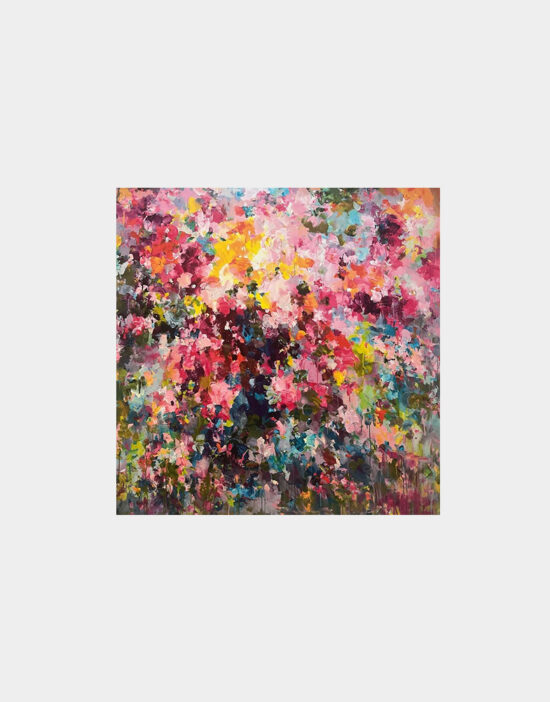
Mr Jago – Hyperion
Duncan Jago’s career as Mr. Jago began as a formative artist in Bristol’s acclaimed graffiti scene. He initiated the Scrawl movement, a school of street art that elected members based on their abilities with line, movement, and narrative composition. Jago was featured in the seminal, eponymous book Scrawl published in 1999. Having studied illustration at the University of the West of England, Mr. Jago’s style, initially heavily illustrative, has evolved into something far more abstracted and expressive. Mr. Jago has taken spray painting to a level of sophistication rarely seen in the medium; there is maturity and depth to his use of colour which he uses to describe the natural world and the cosmos, as he says: “A love of nature has been the biggest influence on my work, the forms and flows that exist within it seem to be appearing … more and more nowadays.” These references to landscape imagery with less emphasis on gesture and brushstrokes, combined with a strong focus on colour and its emotional function, is strongly reminiscent of the mid-century Colour Field movement, pioneered by the Abstract Expressionist Mark Rothko. Mr Jago is also influenced by painters such as Jules Olitski, Dan Chistensen and Albert Stadler.£995.00 -

MrJago – Vespertine
Duncan Jago’s career as Mr. Jago began as a formative artist in Bristol’s acclaimed graffiti scene. He initiated the Scrawl movement, a school of street art that elected members based on their abilities with line, movement, and narrative composition. Jago was featured in the seminal, eponymous book Scrawl published in 1999. Having studied illustration at the University of the West of England, Mr. Jago’s style, initially heavily illustrative, has evolved into something far more abstracted and expressive. Mr. Jago has taken spray painting to a level of sophistication rarely seen in the medium; there is maturity and depth to his use of colour which he uses to describe the natural world and the cosmos, as he says: “A love of nature has been the biggest influence on my work, the forms and flows that exist within it seem to be appearing … more and more nowadays.” These references to landscape imagery with less emphasis on gesture and brushstrokes, combined with a strong focus on colour and its emotional function, is strongly reminiscent of the mid-century Colour Field movement, pioneered by the Abstract Expressionist Mark Rothko. Mr Jago is also influenced by painters such as Jules Olitski, Dan Chistensen and Albert Stadler.£1,500.00
No more products to show